By clicking “Accept All Cookies”, you agree to the storing of cookies on your device to enhance site navigation, analyze site usage, and assist in our marketing efforts. View our Privacy Policy for more information.
Programming Training at CrossFit Hampton Roads
Discover how CrossFit Hampton Roads programs with purpose—balancing intensity, variance, coaching, and long-term health for our members.
By
February 3, 2026
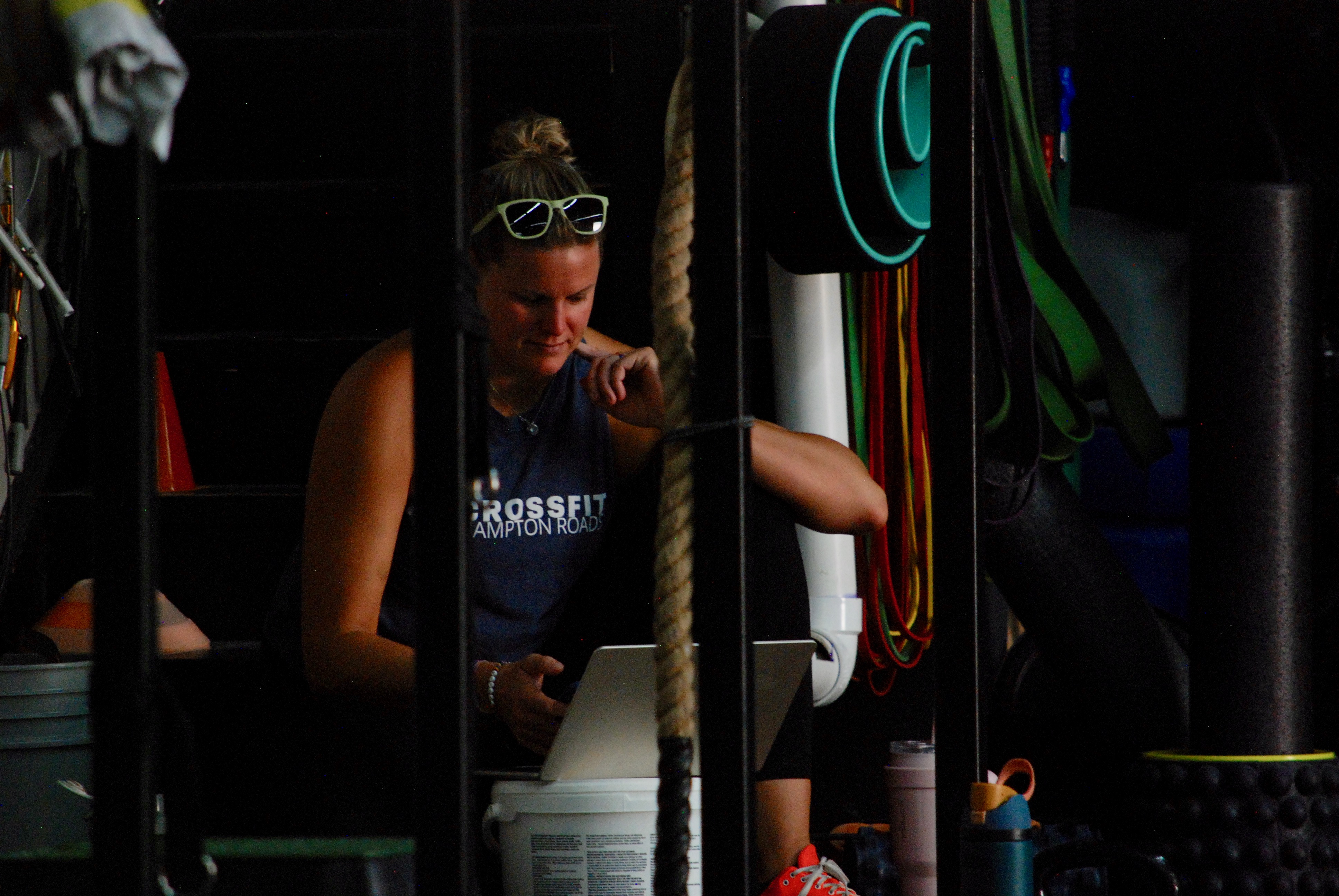

There is a lot of talk in the CrossFit community, especially for those that have been around for a while, about “good” and “bad” programming. Sometimes people feel very strongly about programming, and others believe just getting into the gym and doing a workout without judgement is enough. Both perspectives are valid. But, for those that love to learn and dive into the behind the scenes aspect of working out, programming is one of the first places they look. So, I thought I would take some time today to explain how CrossFit Hampton Roads decides on programming and the reasons behind our choices. It’s also important to keep in mind that we are a lifestyle gym - meaning our primary purpose is to keep people healthy for as long as possible. Our vision statement: “We believe that providing a safe environment with supportive people will create health for generations to come. Embrace the challenge and win, regardless of the outcome” dictates our programming first and foremost, and some questions arise from that guide us in our decisions. Those are:
- What is the purpose of what we are doing? Why are we doing this workout/lifting session/practice/accessory?
- How will this make our members more fit?
- Does it align with the seasonal CrossFit calendar (for most of our athletes that is the Open, maybe quarterfinals)?
- Does it align with our strength cycles?
- Does it align with the programming principles set down by CrossFit?
- Is this even fun/interesting?
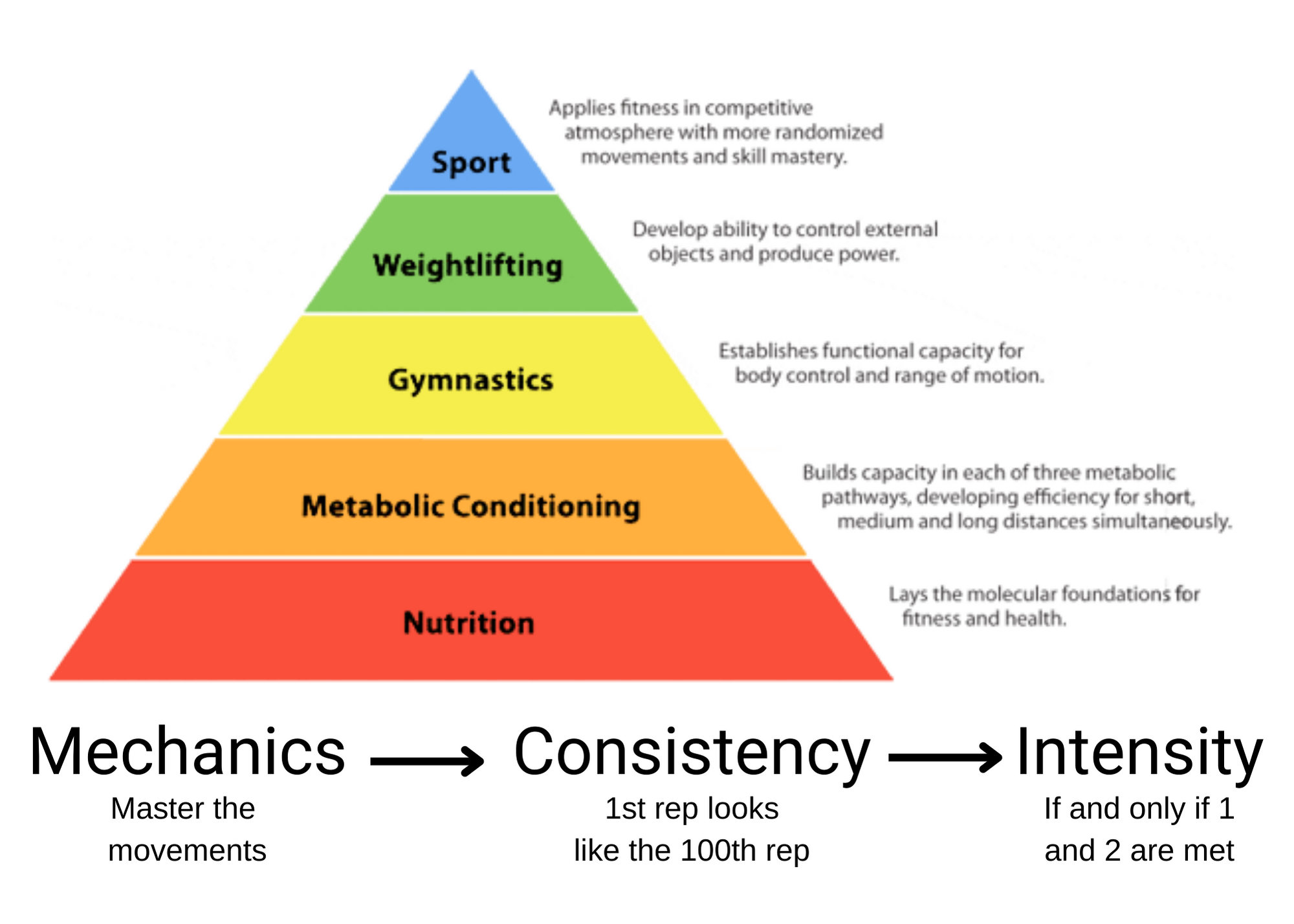
I have to set the stage first with some info about what exactly CrossFit programming is: “The goal is to increase fitness, which we define as work capacity across broad time and modal domains, with the long-term approach being that we want to build our fitness levels as high as possible and sustain it for as long as possible so we have great capacity throughout all of the years of our lives.” Then we rely heavily on variance and intensity. Variance comes in the form of load, volume, movements, modality and time. Intensity comes from our short time durations (8-15 min), complementary movement patterns (push and pull), high power movements (think thrusters and double unders), couplets and triplets (elegance in simplicity) and priority (how fast or how much?). That is a lot, but approached with a system, all these things can be managed over time.
When we decided to move away from a pay for program approach at the gym, we first asked ourselves, why? What was wrong with what we were doing? We listened to our members, heard their criticisms and then looked at months of programming before we decided to branch out on our own. After analyzation we found a few things:
- The programming was kind of boring - what we perceived as a lack of creativity. That didn’t want to make us keep coming back. -1 point
- There was more repetition than we liked - lots of the same time domain or movements. A lot of the same structure of workouts with similar movements. We didn’t feel as though there was enough variance to make our athletes fitter.
- Lack of intensity. We really wanted our members to get the most out of the hour they were with us. We didn’t think that was happening, and we tried adding things in, but that made things even more difficult.
So, we decided to try it out for ourselves. We didn’t start from scratch though. We used CrossFit.com (also known as “dot com”) programming as a guide. We looked at what they had been doing for the past 2-3 years and started to take cues from them. We also set some goals for the gym, based on what we were seeing in class, what PRs were and were not happening, and what our members' goals were.
- Good, attentive coaching has always been our bedrock. Whatever programming we designed needed to support coaches by giving them enough time to actually coach.
- We wanted a squat, a press and a hinge at least once a week. We wanted our athletes to get under a heavy barbell with those movements.
- We wanted a mixture of all different time domains, ranging from 5 min to 40 min. Some time domains we agreed needed to be seen more, and in true CrossFit fashion, that is usually between 8-15 mins.
- We wanted to focus on specific movements in smaller cycles, those movements that require a lot of neuromuscular adaptation to improve, and not so much muscular strength. Those were: thrusters, squat and power cleans, squat and power snatches, and overhead squats.
- Lastly, we brought in our Coaches’ challenge for those athletes that want a little bit more, but we didn’t have a lot of time to put into class. We knew prepping movements for the Open would be athlete specific, so Jan and Feb were the athletes choice.
I also need to add here that when I saw we, I mean myself and Ray. Because have you ever seen me do anything without Ray? Zora also throws in a few thoughts and double checks us, so there is a small team of us working on this.
We start a month ahead and start to plug things into a spreadsheet. We reviewed last month and saw where we hit the mark and where we missed. Did people improve? If not, why? Then, there are movements and benchmarks that we have to put into programming, time domains we want to see, practice times that need to be allotted for. We then can start to fill in the rest. What’s fun? What haven’t we done in a while? We go week by week, looking for redundancies and conflicting movements. Then it gets reviewed again by Zora. By no means are we perfect. We learn something new every month, every week! Nevertheless, programming the gym’s workouts this way has pushed us to look at what our athletes need and take charge of the methods we use to help them improve. We do not claim that our programming is magical or more special than other offerings, however we believe that our programming is what works for our members and coaches. It adheres to our mission statement, and when we find that it doesn’t we have the power and knowledge to change it.


.png)