By clicking “Accept All Cookies”, you agree to the storing of cookies on your device to enhance site navigation, analyze site usage, and assist in our marketing efforts. View our Privacy Policy for more information.
Relative Intensity: Why More Isn't Always Better in CrossFit
Learn how to scale CrossFit intensity based on sleep, stress, recovery, and readiness so you can train consistently and avoid burnout for years.
By
June 3, 2026

When I first became a CrossFit athlete, I wanted to come to every workout possible. Sometimes I came to class knowing I wasn't recovered enough, just because I wanted to do the workout. Everything was exciting: the way class ran, the movements, the way they combined, the timeframes and structures, and the lingering question of "can I do this?" It all intrigued me.
I quickly found out that finding the workouts mentally stimulating didn't mean I should actually do them all. When I was new, I had to scale everything. I was not strong at all. I could barely front squat with a 35lb bar, and I definitely couldn't do a push-up or pull-up. So I scaled.
My next thought was, "Well, if I'm scaling, that means I can come to class more times a week." Then I learned that more was not always better. At least not at first. I had to wait for my body to catch up. Doing more of the stuff I couldn't do well, with movement mechanics that weren't great either, didn't make me much better.
That's when my coach explained relative intensity. Intensity is a highly individualized concept. What is intense for me is NOT what is intense for my 60 year old mother. And intensity on Monday after two days of recovery is not the same as intensity on Friday after five days of training. So I needed to learn about myself.
Understanding how to scale intensity based on factors like experience, fatigue, stress, and recovery is key to sustainable progress. Whether you're training for longevity, athletic performance, or just to feel better in daily life, knowing how to adjust your intensity is crucial.
What is Relative Intensity?
Relative intensity might be my favorite thing about CrossFit. When it's applied correctly, CrossFit works for anyone. You can take any workout and make the intensity appropriate for you, depending on recovery, sleep, overall fitness, and mental readiness. What a gift to look at a workout and know you can make it work for you.
"At the CrossFit Level 1 Certificate Course, we define relative intensity as intensity determined by an individual's current physical and psychological tolerances. This foundation allows a well-conditioned athlete, a busy parent squeezing in two workouts per week, and an 85-year-old new to exercise to all benefit from the same program… The beauty lies in consistency: regardless of their goal, athletes see results by consistently working at intensity levels at or near their current capacity."
What can influence my relative intensity?
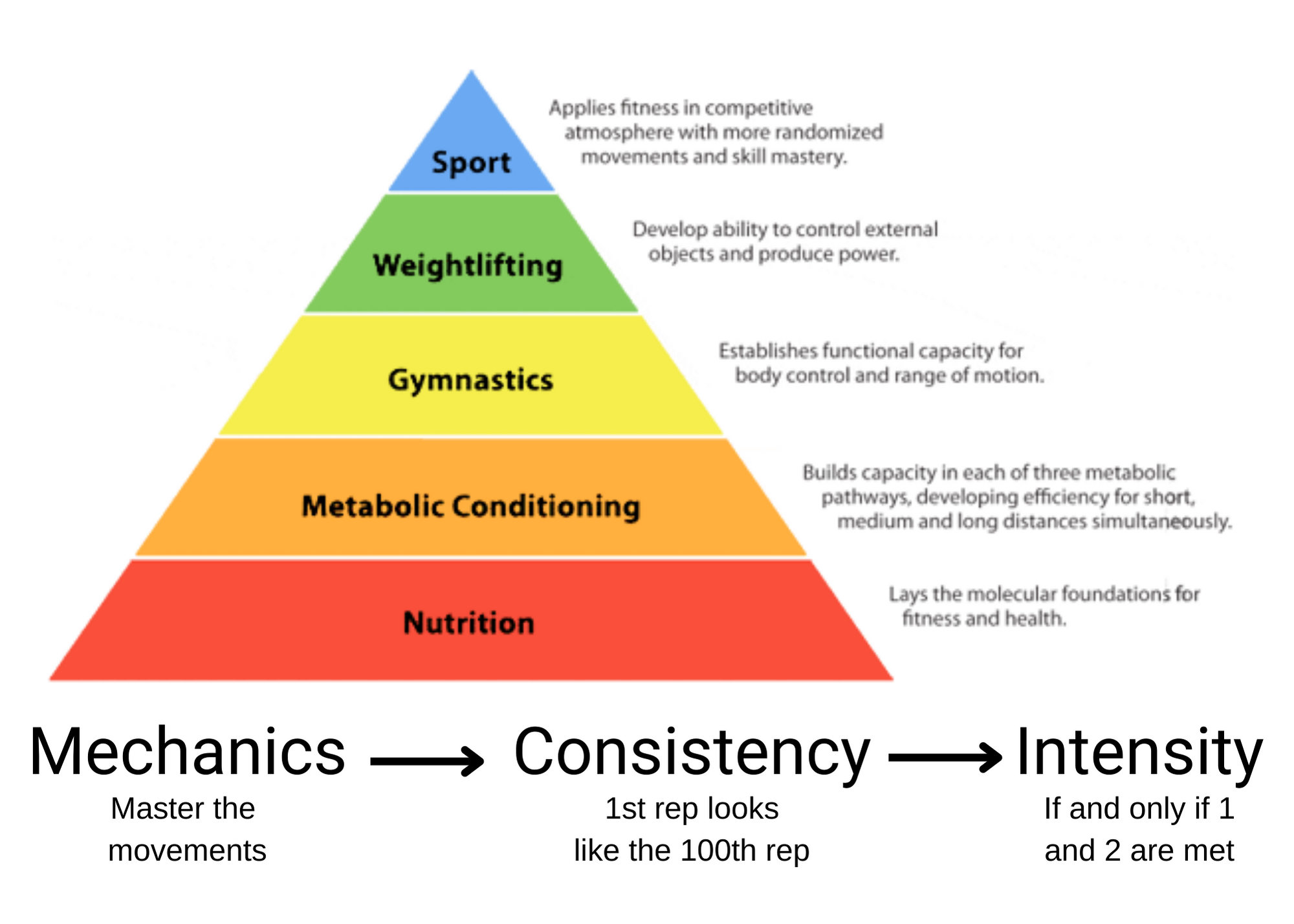
Overall Fitness. A beginner has much different needs than a seasoned athlete. They are building a habit, exposing the body to new things, and learning to recover. A new athlete should focus on learning the mechanics and moving well consistently, then add intensity. A seasoned athlete already has good mechanics and uses intensity to push their fitness forward.
Stress. Stress is the most under-recognized hiccup for athletes. Everyday athletes experience stress of all different manners, and those stressors tax the body, often in ways we can't see or feel. If you're stressed during the day, or dealing with long-term stress, your ability to tolerate intensity may be compromised.
Nutrition and Hydration. If you haven't had enough food or water, your ability to produce power will suffer, and so will your intensity. Staying properly hydrated and eating whole, nutrient-dense foods will improve recovery and help you tolerate intensity in your WODs.
Recovery. Your readiness for intensity depends on how well you've recovered from previous workouts. Signs of poor recovery include:
- Persistent muscle soreness
- Decreased motivation
- Trouble sleeping
- A lack of progress in strength or endurance
If you're still fatigued from your last workout, it may be smart to scale intensity down for the day.
Sleep. Sleep is the cheapest yet most important recovery tool we have, and so many of us don't get enough of it. Too little sleep can affect your workouts greatly.
Mental Readiness. Some days the workout is exciting and you're ready to push hard, lift heavy, and move fast. Other days the same workout seems overwhelming. Your mental state affects how ready you are for intensity. If motivation is low, you can always come in for a warm-up and see how you feel. Oftentimes, once I get moving, I feel much better.
How to adjust your intensity
I always start by assessing how I feel. Sometimes that's in the car on the way, sometimes when I wake up, sometimes during the warm-up. I ask myself a few questions:
- How did I sleep and eat yesterday?
- Am I feeling energized and excited, or full of dread?
- How sore am I from this week's workouts?
Then rank your readiness:
- 5/5 — "I'm ready to crush this. Let's go for a PR." Do it.
- 4/5 — "I feel pretty good, but not amazing." Train at 80 to 90%.
- 3/5 — "I'm a little sore and didn't sleep well." Scale weights and consider modifying movements.
- 2/5 — "I'm not so excited about this, and I'm feeling stressed." Focus on technique and good movement. Don't worry about time or weights.
- 1/5 — "I'm so sore and tired." Just move. Prioritize light movement and mobility work.
Why scaling matters, especially for long-term fitness
Smart athletes know when to scale. Many have endured injuries, or watched their real intensity drop because they pushed too hard. They know when to hold back, because they understand progress is a long-term goal fueled by a consistent approach. When intensity is at 100 every day, consistency gets disrupted by injuries, fatigue, or burnout. That's called overtraining.
By adjusting your workouts based on what your body is telling you, you can:
- Minimize injury
- Maximize recovery
- Make training fun and enjoyable
- Stay consistent in the gym
Relative intensity makes training accessible to everyone, regardless of ability. By listening to your body and making adjustments based on recovery, sleep, nutrition, and mental readiness, you can train consistently and effectively for years to come. That leads to fitness that will last a lifetime.


.png)